What Happens at a Murder Mystery Dinner? Step by Step
If you've always wondered what happens at a murder mystery dinner, this is your definitive guide.
A murder mystery dinner turns an ordinary evening meal into a live whodunnit. You sit down to eat, but somewhere between the starter and coffee a story unfolds around you, actors perform in character, secrets are revealed, a murder occurs and everyone at the table ends up arguing about who did it. If you have booked your first event and you are not sure what to expect, the good news is that the evening follows a fairly predictable rhythm.
This walkthrough explains that rhythm from start to finish, so you know when you will be eating, when you will be watching, and when you will be expected to join in.
The Short Version: What the Evening Involves
A murder mystery evening is an immersive event that casts you and your fellow diners as detectives. The story is broken up by dinner, so you eat, watch, talk and question across the course of the night. As you work through each course, you and the other guests gather clues, analyse evidence and interrogate suspects until the killer is finally uncovered.
Most events share the same skeleton: arrival, a briefing, performed scenes, food, a murder, questions, an accusation, and a reveal.
Before You Arrive
The groundwork happens before the night itself. When you book, you will usually be asked about dietary requirements and any access needs, and you will be given an arrival time. Turning up a little early is rarely a problem, and it gives you time to settle before the action starts.
You do not need to prepare anything. You will not be asked to learn lines or invent a character. If you are going as part of a group, let the organiser know who is in the party so seating can be arranged sensibly. If you are going as a couple, you will still be placed with other guests, which is part of the fun.
Step One: Arrival and Settling In
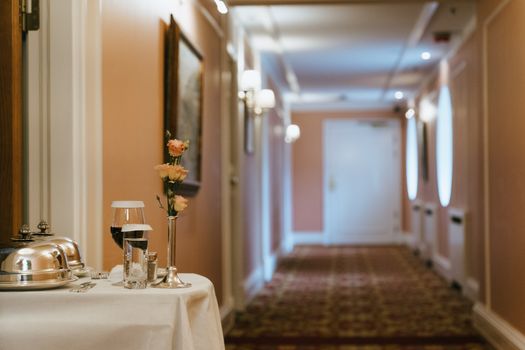
Guests arrive, find their tables and order a drink. This is often the point where the cast first appears, moving between tables in character rather than waiting for a formal start. You may be greeted by a hotel manager type, a nervous relative or someone else entirely, and it is fine to chat back. A short exchange at this stage can plant your first suspicion of the night.
Expect a little gentle confusion. Nobody knows quite what is going on yet, including the characters, and that is deliberate. Use the time to look at any information on your table, find out who you are sitting with, and get comfortable.
Step Two: The Briefing
Once everyone is seated, the host or a leading character explains how the evening will run. This briefing usually covers the shape of the night, when food will arrive and what you are expected to do when the time comes to accuse someone.
You will normally be given a programme with a bit of background, some clues and photos of the characters, with plenty of space to make notes The rules are generally simple: pay attention, talk to the people at your table, ask questions of the cast, and note down anything that seems important. There is no hidden test and no need to perform.
Step Three: The Scenes
The cast performs a series of short scenes throughout the evening. The scenes are where you learn who the suspects are and what each of them stands to gain. Listen for the details that seem throwaway at the time. In a well-written mystery, the comment that sounds like small talk often turns out to matter a great deal later on.
Each scene brings new information. A good mystery aims to have some sort of exciting twist or secret surface at a number of points during the evening, which keeps the suspense alive right through the event rather than letting it dip between courses.
This structure is why a murder mystery dinner rarely drags. There is always another piece of the puzzle arriving, and each one tends to change how you read what came before.
Step Four: Dinner, Served in Stages
The meal is not a separate interval. It is woven into the night. At a typical public dinner event the food runs to three courses, with scenes slotted between them so the story keeps moving while you eat.
Between courses you will be talking to your table about what you have just seen, comparing notes and working out what to ask next. Expect the conversation at your table to become steadily more animated as the evening goes on. By the dessert, most tables have a firm theory and at least one person defending it loudly.
Step Five: The Murder
The murder itself tends to land at a carefully chosen moment. Just as the desserts are being cleared something will happen, and one of the characters will die or be found dead. The timing is deliberate: everyone has eaten, the room is relaxed, and the sudden shock pulls the whole table back to attention. From that point on, the meal is over in spirit even if the coffee is still to come, and the evening turns into a hunt for a killer.
Step Six: Questioning the Suspects
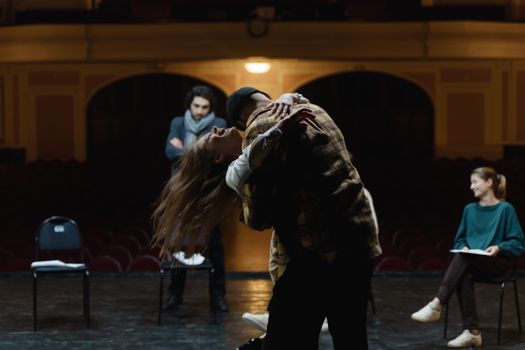
Once the murder victim has been removed guests are invited to put questions to the suspects. The cast stays in character throughout, which means you will get answers that are evasive, defensive, indignant or occasionally far too helpful. Someone is lying, and part of the challenge is working out which of them is lying about the murder and which is simply hiding something embarrassing.
You do not have to ask anything. Plenty of guests prefer to watch and listen, then contribute at their table. But if you have a question, ask it. The cast will run with whatever you give them, and an unexpected question from the back of the room often produces the best moment of the night.
Step Seven: Making Your Accusation
Towards the end of the evening, the host calls for accusations. You and your table decide who you believe committed the murder, and you set out your reasoning. You will also be asked to name the method, the motive, or the piece of evidence that gave the game away.
This is the noisiest part of the night. Tables that have been quietly confident all evening discover they have reached completely different conclusions, and the last few minutes before the reveal are usually spent in urgent negotiation.
Step Eight: The Reveal
The cast returns and the solution is revealed. This is normally the most satisfying part of the evening, particularly when the answer was sitting in plain sight from the first scene.
After the reveal, the table with the theory that is closest to the correct solution will be congratulated and awarded a prize The formal part of the evening is now over and guests are free to finish their drinks, talk to the cast out of character, and compare theories on the way home.

How the Format Changes by Event Type
The bones of the evening stay the same, but the shape of the event varies depending on what you have booked.
Event type | How it runs | Best suited to |
|---|---|---|
Public murder mystery evening | A single evening built around a dinner of roughly three courses, with scenes between the courses | Couples and small groups marking a birthday, anniversary or simply a good night out |
One-night weekend break | Runs from Saturday afternoon with a cream tea through to breakfast on Sunday, with the mystery unfolding across the stay | Groups who want the celebration to last longer than one evening |
New Year's Eve event | A welcome drink, a four-course dinner and a disco alongside the mystery | Christmas and New Year parties with a mixed group |
Private or corporate booking | Written and staged for your group, typically 25 to 100 people | Corporate hospitality, social clubs, hen parties and milestone celebrations |
What to Wear and What to Take
Smart casual is a safe default for most dinner events, and venues with a dress code will tell you in advance. Themed dressing is usually optional rather than expected. A few guests will go all out, most will not, and both approaches work perfectly well.
Take reading glasses if you need them for the programme. Beyond that, you do not need to bring anything. The event supplies the story, the suspects and a pen for you to make notes with.
How do I find out more about what happens at a murder mystery dinner?
Check out the frequently asked questions page for more details, or call the Killing Game who will be happy to answer your questions.
h2>Where and when do they take place?There are normally two or three events taking place every weekend, just check the event diary to see all the dates for the year ahead.